
Case Study · England & Scotland
How ViVi Stays Cut Cancellations by 42% Across Around 90 Short-Term Lets in Scotland and England
About ViVi Stays: Around 90 Short-Term Lets in Scotland and England
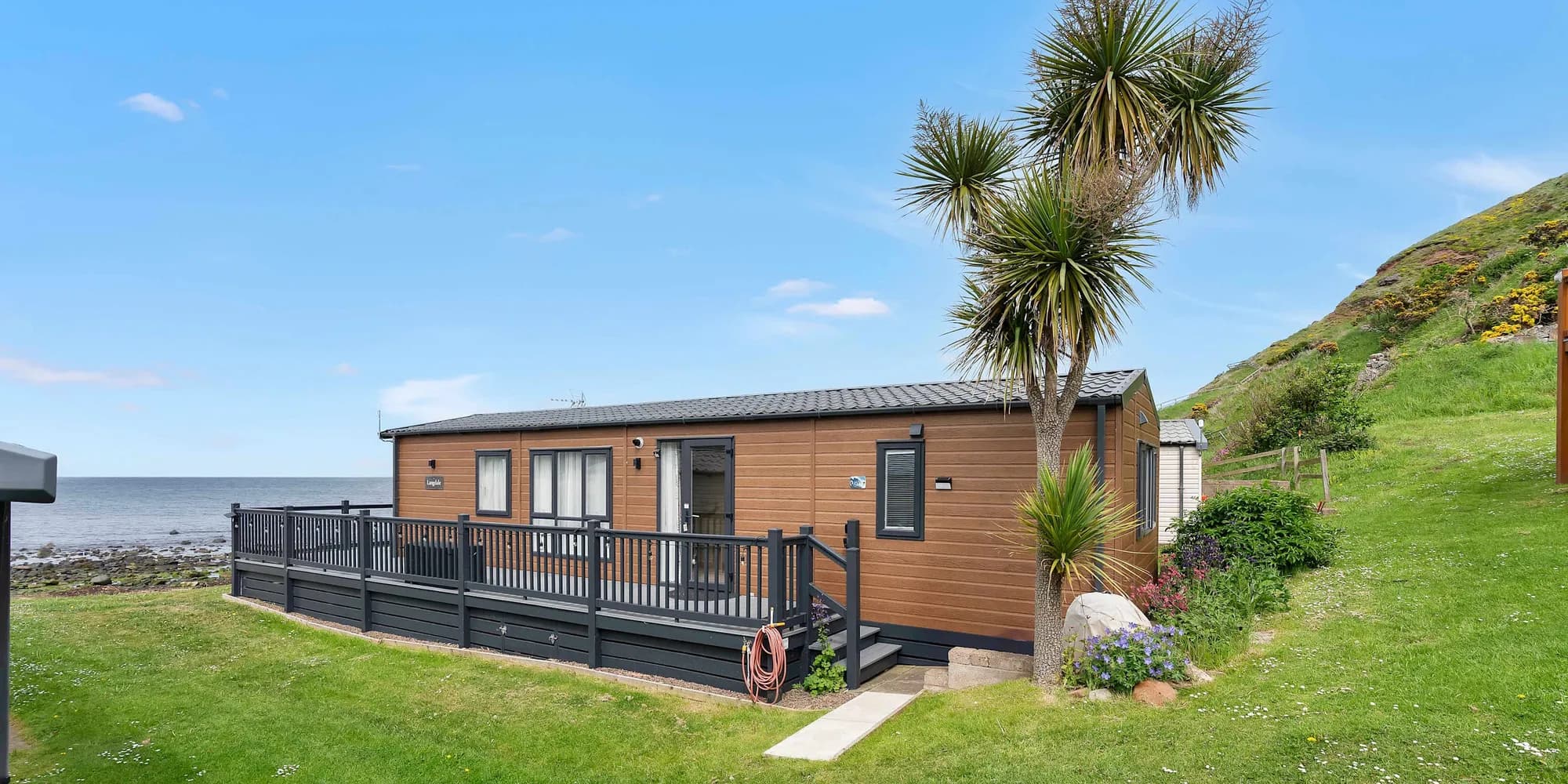
ViVi Stays runs around 90 short-term lets and holiday lets: houses, apartments, static caravans and luxury lodges. Its guests are contractors on long stays, families who want space, and relocators on monthly stays.
The homes stretch from Aberdeen to Blackpool. In Scotland: Edinburgh and the Lothians (Edinburgh, Port Seton, Cockenzie, Prestonpans, Dunbar, Bonnyrigg, Dalkeith, Gorebridge, Bo'ness, West Lothian and Midlothian), Fife and Falkirk (Rosyth, Kirkcaldy, Methil, Oakley, Falkirk), Aberdeen and the north-east (Aberdeen, Stonehaven, Inverurie, Peterhead), Glasgow and Paisley, and the Scottish Borders (Hawick, Galashiels, Selkirk, Peebles, Pease Bay). In England: the North East (Newcastle upon Tyne, Gateshead, Sunderland, Consett, Coxhoe, New Brancepeth) and the North West (Blackpool, Barrow-in-Furness).
Every town is its own market, and every guest type books differently. The PriceLabs pricing engine generates ViVi Stays' prices, and Hostlyft runs the revenue management on top of it. We started in May 2026, going into high season, when those prices were not set up correctly.
Goal: One pricing system that still treats every home on its own terms: priced for its own market, grouped by how guests book it, with a cancellation policy that fits it, and a goal for every season to measure against.
At a glance
- Around 90 short-term lets across Scotland and England
- Houses, apartments, static caravans and luxury lodges
- Contractors, families and relocators
- Prices from PriceLabs, revenue management by Hostlyft
- Since May 2026, ongoing
The Problem: No Pricing System Going Into High Season
One Price Logic for Every Market
Going into high season, holiday let pricing was not set up correctly, and every market was priced the same way. A home in Aberdeen followed the same logic as a home in Blackpool, instead of rates set to match real demand.
No Grouping by Booking Behaviour
Homes were not grouped by how guests book them. Every home followed the same setup, however it was booked.
No Cancellation Policy System
Cancellation policies had no logic behind them. Between April and June, about one booking in five was cancelled.
No Goals, No Tracking
There were no revenue goals and no system around pricing. Nothing showed whether a season was on track.
Promotions Cutting Too Deep
Some promotions cut prices too deep. They cost revenue instead of raising the listings' visibility.
The Result: Around 90 homes heading into high season with one price logic, one booking in five cancelled, and no way to tell whether the summer was working.
Our Approach: Pricing Every Home for Its Own Market
Audited the Portfolio and Priced Every Home for Its Own Market
First, we audited the whole portfolio. Then we set each listing's PriceLabs pricing against its own local market, not one rule for all.
Grouped Every Home by Booking Behaviour
We sorted every home into a group by how guests book it. Each home now sits with others that book the same way.
Built a Cancellation Policy System by Property Type
Each cancellation policy now matches the type of property. The new policies went live on 1 July 2026.
Set Revenue Goals and Pacing Targets for Every Season
Every season now has a revenue goal, with pacing targets for how bookings should build up before it. Success has something to be measured against.
Reworked the Promotions
We fixed the promotions that cut too deep. Then we added promotion strategies that raise visibility without costing the portfolio revenue.
Results: 42% Fewer Cancellations, Occupancy Above Market
The new cancellation policies went live on 1 July. Since then, about one booking in eight has been cancelled, down from one in five, and the number of bookings has held level.
With every home priced for its own market, we raised the nightly rate (ADR) towards the market and let occupancy's lead narrow, on purpose. The rate moved ten points closer to the market, occupancy stayed above it all summer (78.8% against 71.7%), and revenue per available night (RevPAR) rose against it. 57 of the 85 homes we track beat their own local market on occupancy.
That is short-term rental revenue management on a live portfolio: the system first, then daily work against each season's goal. The work is ongoing, and so are these figures.
Source: ViVi Stays' PriceLabs account on 24 September 2026, compared with the local market or the period before each change, as there is no usable 2025 data (cancellations: 7 April–30 June vs 1 July–23 September; occupancy: stays 25 May–30 September; rate and RevPAR: stays 1 January–24 May vs 25 May–30 September 2026).
42%Fewer cancellations
+10 ptsNightly rate closer to market
78.8%Summer occupancy
+7%Revenue per available night vs market
Before & After
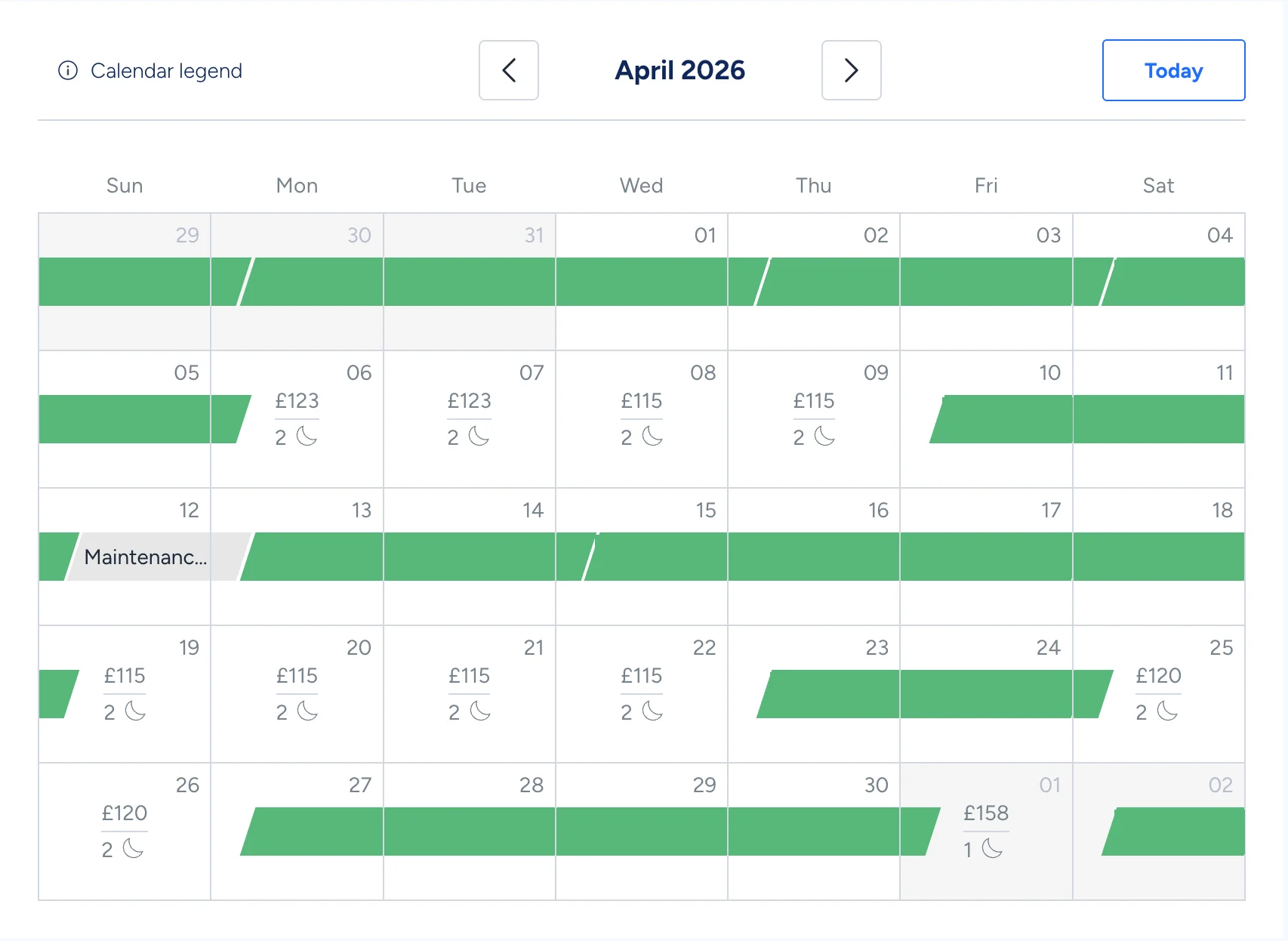
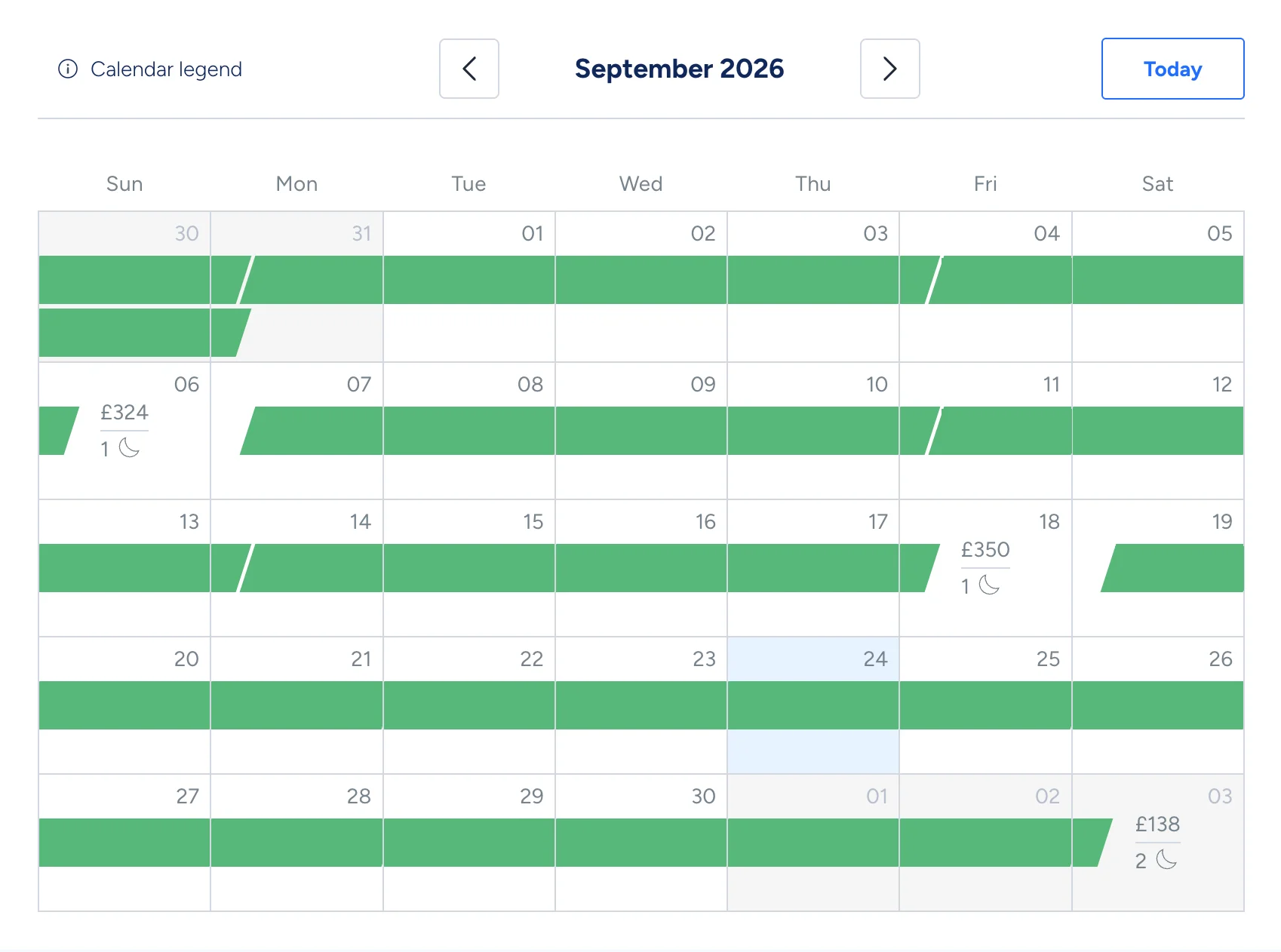
The same Seton Sands caravan in April 2026, before we started, and in September 2026. Nights booked went from about two in three to all but two.
What's Next: Daily Portfolio Management
Daily Portfolio Management
We keep working on the portfolio every day, against a revenue goal for every season. The results so far have been very good.
Choosing Revenue Management for Your Portfolio
Start with what to look for in a short-term rental revenue manager. Our portfolio pricing is set by how many homes you run.
More Case Studies
See how SettlerHomes tripled revenue in Dubai and how UniqueAway boosted bookings by 50% in New York and New Jersey.
Want similar results for your short-term lets?
Tell us about your portfolio: how many homes you run, and where. We will get back to you ASAP.